
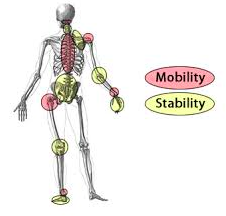
Our bodies are intricately woven collections of systems, each system influencing the others in a delicate balance. It's crucial to recognize that addressing one aspect of a specific system in isolation doesn't provide a comprehensive solution. This is because other systems have likely adapted to compensate for the sub-optimal functioning of that one system.
Consider each joint as its own unique system, each with a specific function that ripples through other systems. Take, for instance, the big toe, which must maintain a minimum range of motion to facilitate hip extension. A minimum extension of 60-65 degrees in the big toe allows the hip to extend 10-20 degrees into hyperextension. If the toe lacks this range of motion, the hip won't go into hyperextension, triggering compensations throughout the body. Over time, the hip adjusts to these demands, resulting in an overall decreased range of motion.
This scenario is not isolated; it can manifest throughout the body. The joint-by-joint approach, as articulated by renowned strength coach Mike Boyle, emphasizes the alternating pattern of mobility and stability joint functions. Trauma or chronic over/underuse of one joint alters its function, subsequently impacting the roles of other joints. In the toe and hip example, both joints primarily serve a mobile function. However, when the toe adapts to become more stable, it disrupts the natural balance, causing the hip to become more stable and resulting in a stiff joint with tight muscles. This dysfunction becomes ingrained over time, leading to overuse, arthritis, fascial densification, muscle fiber adhesions, and an increased risk of injury.
The overarching perspective here is the importance of consulting a physical therapist or chiropractor who considers the entire system rather than merely addressing a localized injury. If you seek therapy for knee pain, and your therapist doesn't, at the very least, examine your foot and hip, it may be a futile effort. Choose a practitioner, like myself, who embraces the big picture, recognizing that the site of pain is seldom the true source of the problem.